

Bengaluru’s fossilized tree is a petrified tree fossil displayed inside Lalbagh Botanical Garden, near the Bandstand. The specimen is estimated to be 20 million years old, making it a distinctive heritage stop within one of the city’s historic gardens.
- Location: Inside Lalbagh Botanical Garden, near the Bandstand and between it and the Topiary Garden.
- Age: The fossil is estimated to be 20 million years old.
- Garden context: Lalbagh was originally built by Hyder Ali in 1760.
Locating the Fossilized Tree
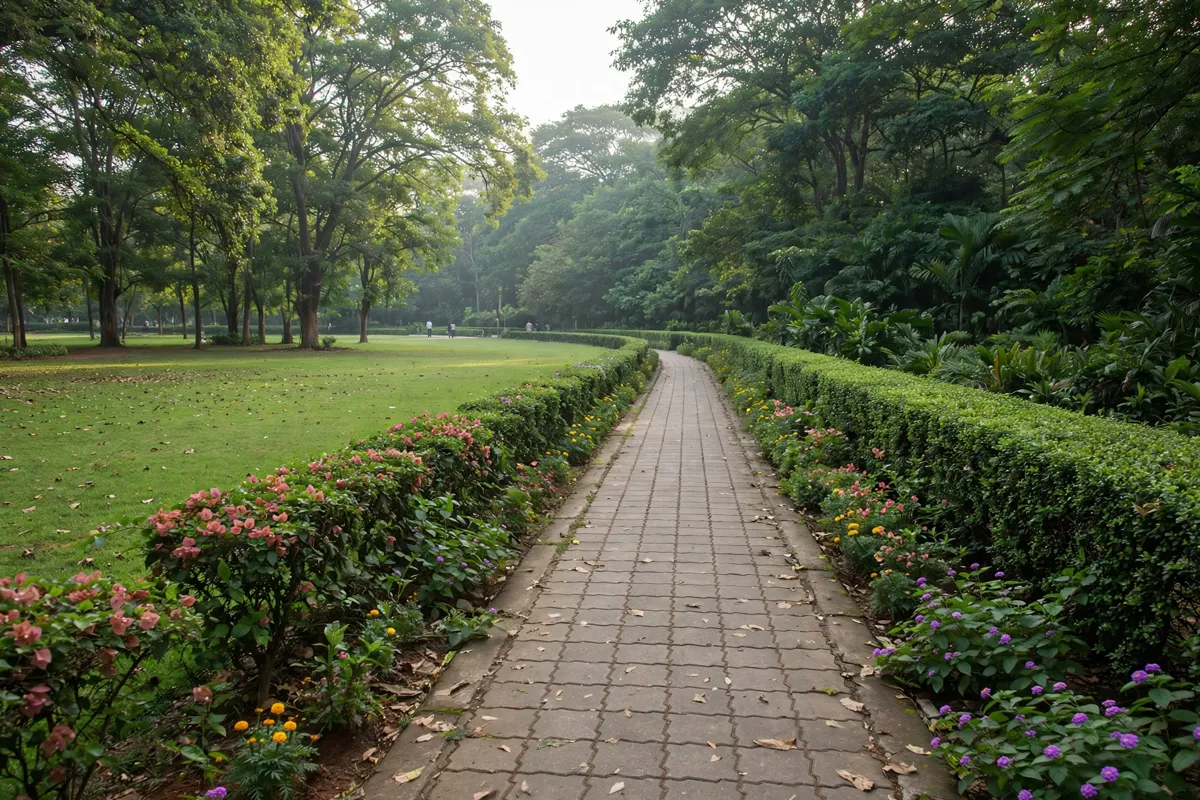
The fossilized tree is inside Lalbagh Botanical Garden, in the area between the Bandstand and Topiary Garden. Karnataka Tourism places it near the Bandstand, while a D’source study gives the more specific position between these two garden features.
Mapcarta’s mapped landmark is near the Topiary Garden. Once inside the garden, use the Bandstand and Topiary Garden as your location references rather than treating the fossil as a separate destination elsewhere in Bengaluru.
What the Fossilized Tree Represents
The specimen is a petrified coniferous tree fossil estimated to be 20 million years old. The D’source study says it was collected from Tamil Nadu and placed between Lalbagh’s Bandstand and Topiary Garden.
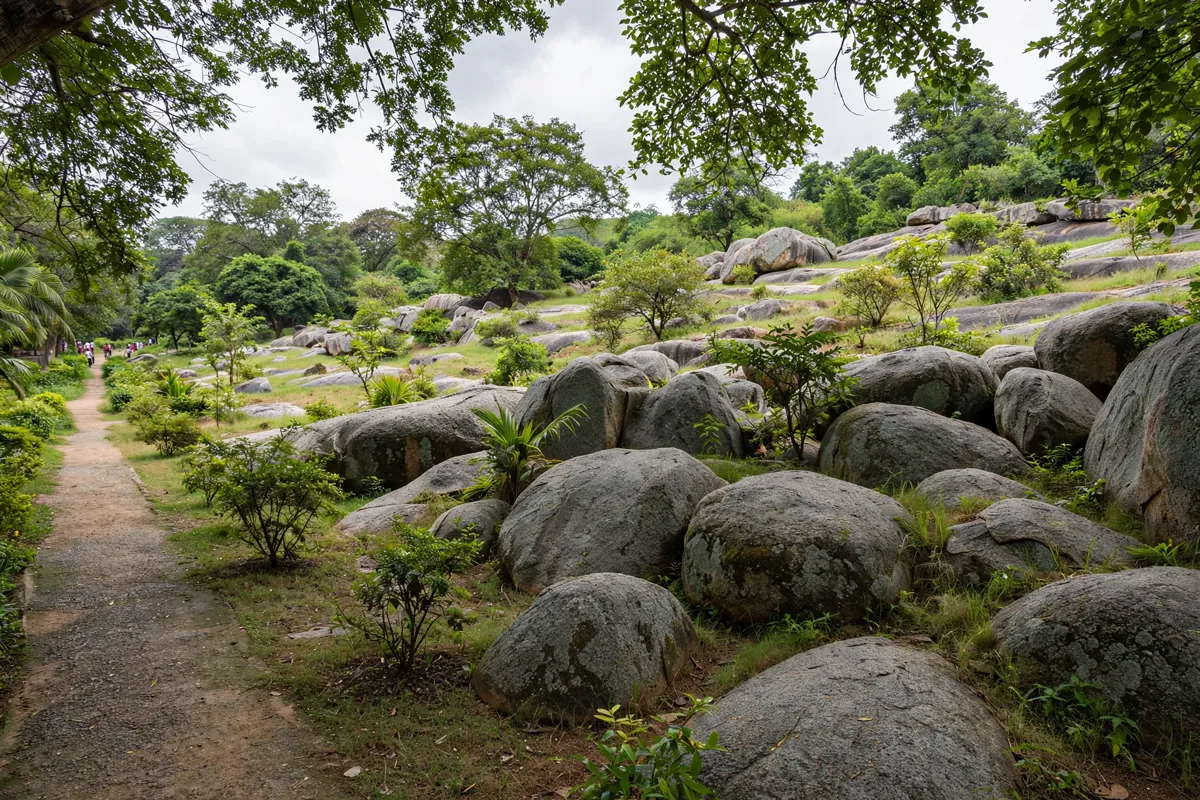
The fossil sits within a garden with a much longer landscape story. Lalbagh was originally built by Hyder Ali in 1760, and its watchtower stands on a rocky outcrop described by the Government of Karnataka district tourism page as about 3,000 million years old.
Access and What Visitors Can See
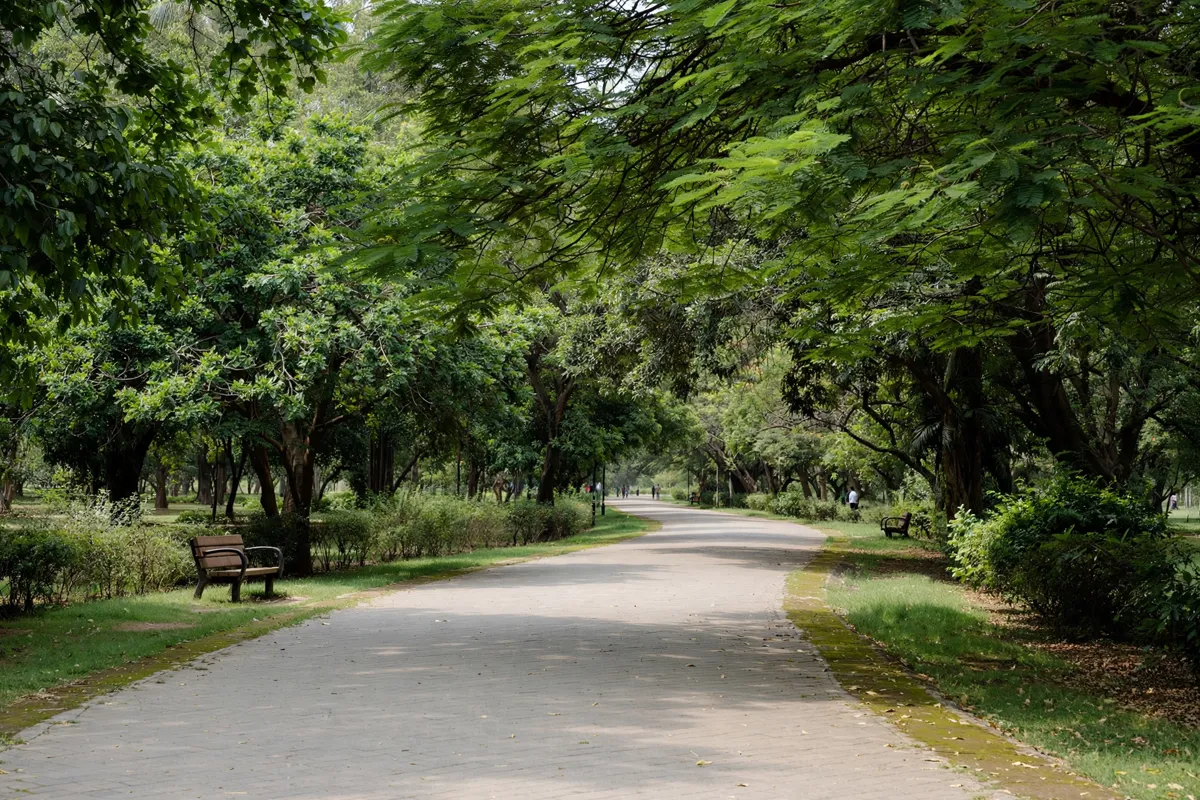
The fossil is one of several attractions within Lalbagh, so you can combine it with other garden features on the same visit. Karnataka Tourism also lists the Glass House, Deer Paddock, Hibiscus Garden, museum, aquarium building and Bandstand among the attractions.
Other garden features include a Bonsai Garden, Floral Clock, Rose Garden and Topiary Garden. Admission and opening hours can change, so check the garden’s official site before you go.
Getting to the Fossilized Tree
The fossil is about a 23-minute drive from Hotel Gangothri. It is inside Lalbagh rather than at a separate street address, so plan time to explore the garden as well. You can also book an Executive Double Room.
For a broader south-and-central Bengaluru itinerary, a one-day route can give you wider route context without changing the fossil’s location within Lalbagh.
Pairing It with Other Places
Keep the fossil as one stop within Lalbagh, then choose another city attraction if you have time beyond the garden. The Bugle Rock Park guide can help you plan that separate stop.
Lalbagh also has a nursery operated by the Department of Horticulture, where plants, saplings, seeds and gardening supplies are offered for purchase. That gives you another garden-related point of interest to consider while planning your visit.
FAQs
Where exactly is Bengaluru’s fossilized tree?
It is inside Lalbagh Botanical Garden, near the Bandstand and between the Bandstand and Topiary Garden.
How old is the fossilized tree?
It is estimated to be 20 million years old.
Where was the fossil collected?
A D’source study says the petrified coniferous tree fossil was collected from Tamil Nadu.
Can you buy plants at Lalbagh?
Yes. The garden’s Department of Horticulture-operated nursery offers plants, saplings, seeds and gardening supplies for purchase.